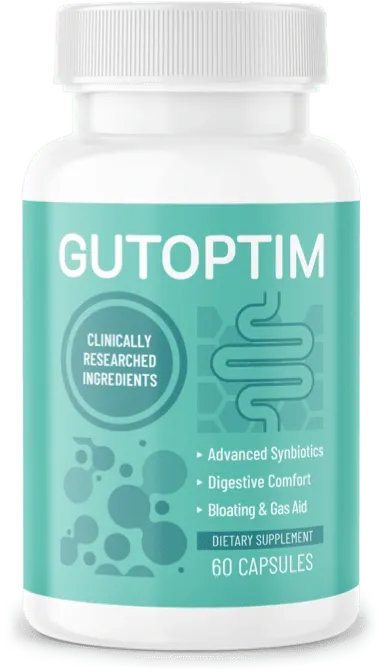

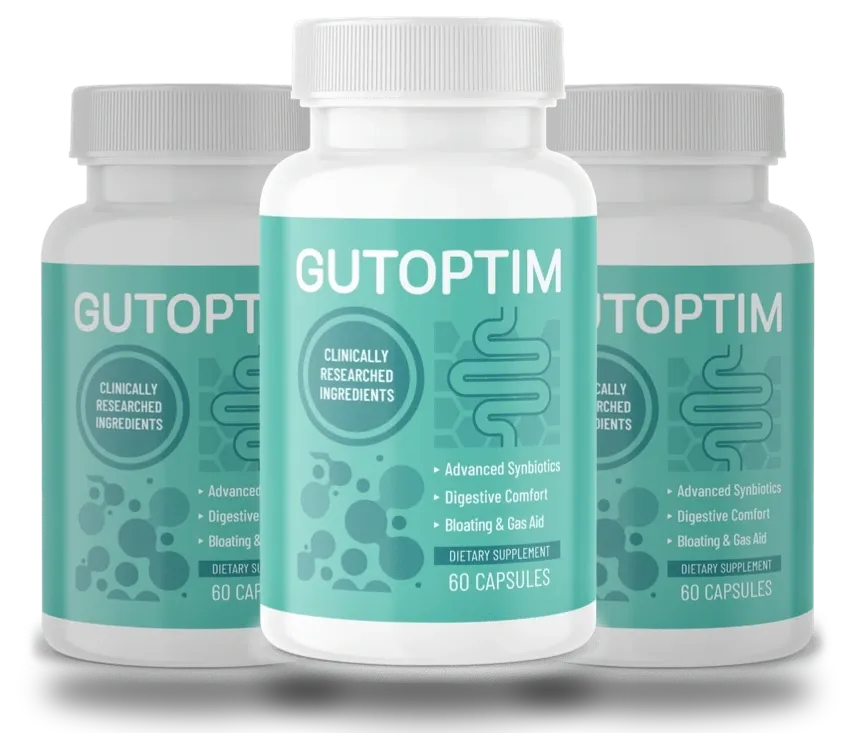
Choosing a Digestive Health Supplement: A GutOptim Buyer's Checklist
Quick answerCheck eleven things before you buy: individual amounts, studied doses, probiotic CFU and strain, capsule type, allergens, a choking warning, third-party testing, the refund policy, price per day, claim wording and a named distributor. Scored honestly, GutOptim earns 6 of 11: strong on warnings, refunds and cost, weak on amounts and testing.
What should a digestive health supplement label tell you?
A good label answers three questions: what is inside, how much, and who checked it. A good seller answers two more: what it costs per day and how to get a refund. This checklist covers all five.
Use it on any capsule, powder or gummy. Score each point as a yes, a partial or a no. Then compare the totals side by side.
What is inside
Individual amounts, studied doses, probiotic CFU and strain.
How it is made
Capsule type, allergens and a choking warning for swelling fibers.
Who checked it
Third-party testing and a named distributor you can contact.
What it costs
Price per day, refund terms and honest claim wording.
Why do individual amounts beat a proprietary blend?
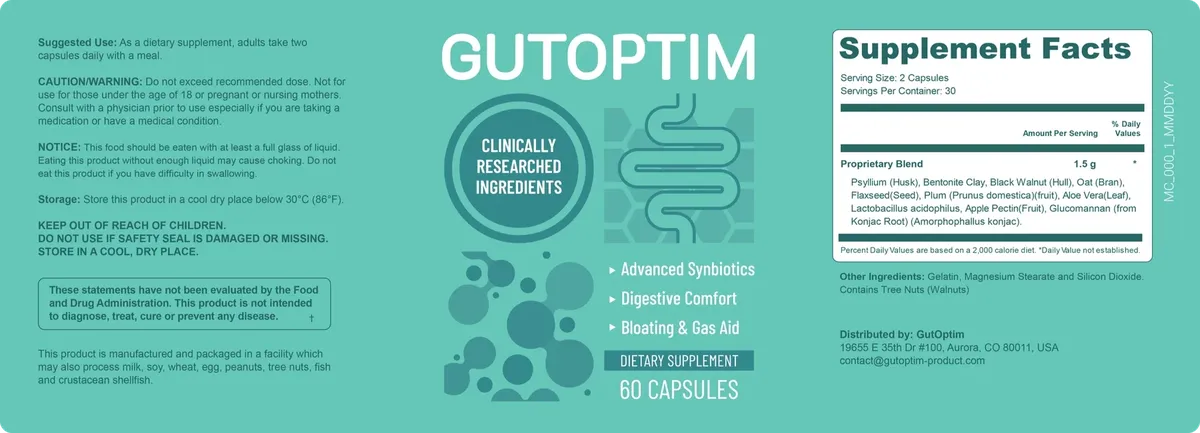
Individual amounts let you judge a product. When each ingredient has its own weight, you can compare it with research. When a label lists only a "proprietary blend," you know the total but not the split.
Blends are legal. Makers use them to protect a formula. For a buyer, though, a blend means you cannot tell if the main fiber is most of the mix or a pinch.
What to look for
Look for a milligram or gram figure on every line of the Supplement Facts panel. If you see one total for several items, score this point as a no. Our Supplement Facts page shows how to read a panel line by line.
How do you check a dose against the research?
A dose only counts if it is close to what studies used. Here are the daily amounts tested for common digestive fibers. Keep this table handy when you read any label.
| Ingredient | Daily amount studied | What was measured | Source |
|---|---|---|---|
| Psyllium husk | About 10 g, starting near 3.4 g | Regularity and stool form | (McRorie et al., 2021) |
| Glucomannan (konjac) | 3-4 g | EU health claim threshold | (EU Regulation 432/2012) |
| Flaxseed | About 10 g | Constipation over 12 weeks | (Soltanian & Janghorbani, 2018) |
| Prunes (dried plums) | 80-120 g | Stool weight and frequency | (Lever et al., 2019) |
| Apple pectin | 6 g | EU cholesterol claim threshold | (EU Regulation 432/2012) |
| Probiotic bacteria | About 1 billion CFU or more | Common minimum per serving | (Hill et al., 2014) |
Notice the scale. Most fiber studies used grams, often several a day. A capsule holds well under a gram each, so check how many a serving needs.
What should a probiotic line show?
A probiotic line should show three things: the species, the strain code and a CFU count. CFU means colony-forming units, the number of live cells. Without a count, you cannot compare one product with another.
Strain matters because results are strain-specific (NIH ODS, Probiotics). One strain of Lactobacillus acidophilus may have trial data while another has none. About 1 billion CFU per serving is a common minimum (Hill et al., 2014).
A stronger label also says whether the count holds "at manufacture" or "through expiration." The second is better, since bacteria can die off on the shelf.
What do the capsule, allergen and warning lines tell you?
The "Other ingredients" line tells you what the capsule is made of. Gelatin comes from animals. Plant capsules are usually listed as HPMC (hypromellose) or pullulan.
Next, find the allergen statement. U.S. labels must name major food allergens, such as tree nuts, milk or wheat. Many also add a facility note about shared equipment.
GutOptim's label is clear on both points. It lists gelatin, magnesium stearate and silicon dioxide. It states "Contains tree nuts (walnuts)" and names the other allergens the facility may process.
Check for a choking warning
Swelling fibers such as psyllium and glucomannan must carry a choking warning and call for a full 8 oz. glass of fluid on over-the-counter products (21 CFR 201.319). Health Canada adds: not right before bed, and not at all with swallowing problems (Health Canada, 2010). A label without this notice is missing a key safety line.
How can you tell if a product was tested?
Third-party testing means an outside lab checked the product. Strong brands publish a certificate of analysis (CoA) for each lot. It shows identity, strength and limits for heavy metals and microbes.
Seals help only when they name who issued them. A "GMP" or "made in a registered facility" badge describes the factory, not the product. FDA does not approve supplements before they are sold (FDA, Q&A on Dietary Supplements).
Clay ingredients deserve extra care. FDA once found high lead in one bentonite clay brand (FDA, Best Bentonite Clay, 2016). A lot-specific lab report is the way to rule that out. See testing and quality and batch verify for what GutOptim shows today.
What makes a refund policy fair?
A fair refund policy is written down, has a clear window and names a phone number and return address. It also says who pays return shipping and how long the refund takes.
Window
How many days you have. GutOptim gives 60 days from purchase.
How to claim
Who to call. For GutOptim, the order desk at +1 (302) 200-3480, with your order ID.
Return rules
Where to send it and what goes inside. Buyers pay tracked return shipping.
Timing
When the money comes back: 3-5 business days after the return is credited, then 5-10 days on the card.
Pick a pack that lets you try the product for several weeks and still claim a refund inside the window. Full terms are on the guarantee page and the refund policy.
How do you work out the real price per day?
Price per day is the fairest way to compare products. Divide the total you pay by the days the order lasts. Include shipping and any tax.
Watch the serving size. A bottle of 60 capsules lasts 60 days at one a day but 30 days at two. GutOptim is two a day, so one bottle is a 30-day supply. Tap a pack below to see its daily cost.
Every GutOptim pack ships free in the U.S. Compare all three on the pricing page.
Which label claims are red flags?
Some words should make you slow down. Honest digestive products use modest, structure-and-function wording with the FDA disclaimer beside it. Watch for the claims below.
"Detox" or "cleanse"
Your liver and kidneys already do this job. A capsule that promises it is selling a feeling.
"Flush toxins"
Rarely names which toxins. Real safety claims name a substance and a test.
Instant results
Fiber studies ran for weeks. Promises of overnight change do not match the research.
FDA approval
A supplement is never “FDA approved” before sale. The FDA disclaimer should appear instead.
Unnamed experts
A "doctor formulated" seal with no doctor named carries no weight.
Weight-loss promises
A digestive fiber product that guarantees weight loss is overselling.
The last check is a name and an address. A real distributor on the label means someone is accountable for the product. Look for a company, a street address and a way to reach them.
How does GutOptim score on the checklist?
Applied honestly, GutOptim scores 6 of 11. It does well on safety wording, refunds, cost and contact details. It falls short on amounts, doses, probiotic detail and published testing.
| Check | What good looks like | What GutOptim shows | Score |
|---|---|---|---|
| Individual amounts | A weight on every ingredient | One 1.5 g proprietary blend for ten ingredients | 0 |
| Studied doses | Near the amounts in the table above | The whole blend is 1.5 g; psyllium studies used about 10 g | 0 |
| CFU and strain | Species, strain code, CFU count | L. acidophilus named; CFU and strain not published | 0 |
| Capsule type | Clear, and matches diet seals | Gelatin listed clearly, but a vegetarian seal appears on marketing | 0.5 |
| Allergens | Named on the label | Contains tree nuts (walnuts), plus a facility note | 1 |
| Choking warning | Full-glass notice for swelling fibers | Printed, with a do-not-use note for swallowing trouble | 1 |
| Third-party testing | Lot-specific lab report | Lot and CoA reference shown; no report published | 0 |
| Refund policy | Written window, phone, address | 60 days, order desk phone, returns address; buyer pays return postage | 1 |
| Price per day | Easy to work out | $1.63 to $2.30 a day, free U.S. shipping | 1 |
| Claim wording | Modest, with FDA disclaimer | Label claims carry the dagger; one marketing image shows an FDA approval seal | 0.5 |
| Named distributor | Company, address, contact | GutOptim, Aurora, CO, with email; U.S. seller named | 1 |
What would lift the score? Publishing the amount of each ingredient, a CFU count with a strain code, and a lab report for lot GUT-26/MY-1730. Until then, GutOptim fits buyers who value a simple daily habit and a clear refund window more than a studied dose. The ingredients page covers each of the ten.
GutOptim buyer's checklist FAQ
What is a proprietary blend?
It is one total weight for several ingredients, with no amount for each one. You know what is inside, but not how much of each.
How do I know if a dose is high enough?
Compare the amount on the label with the amount used in human studies. Psyllium studies, for example, used about 10 g a day.
What should a probiotic label show?
The genus, species and strain code, plus a CFU count. About 1 billion CFU per serving is a common minimum.
Are gelatin capsules vegetarian?
No. Gelatin comes from animals. If you avoid animal products, look for a plant-based capsule such as HPMC or pullulan.
Does FDA approve digestive health supplements?
No. FDA does not have the authority to approve dietary supplements before they are sold.
How do I work out price per day?
Divide the total you pay by the days the order lasts. For GutOptim, the 6-bottle pack is $294 for 180 days, about $1.63 a day.
Does GutOptim publish a lab certificate?
Not yet. The pack shows lot GUT-26/MY-1730 and a certificate reference, GUT-1730-26-MY, but no lab report has been published.
Which words on a label are warning signs?
Detox, flush toxins, instant results, cure, and any claim that a supplement is FDA approved are all reasons to slow down.
Checked the list? Try GutOptim with a 60-day window
Two capsules a day with a meal and a full glass of water. From $49 a bottle with free US shipping and a 60-day money-back guarantee. Questions first? Call +1 (302) 200-3480.