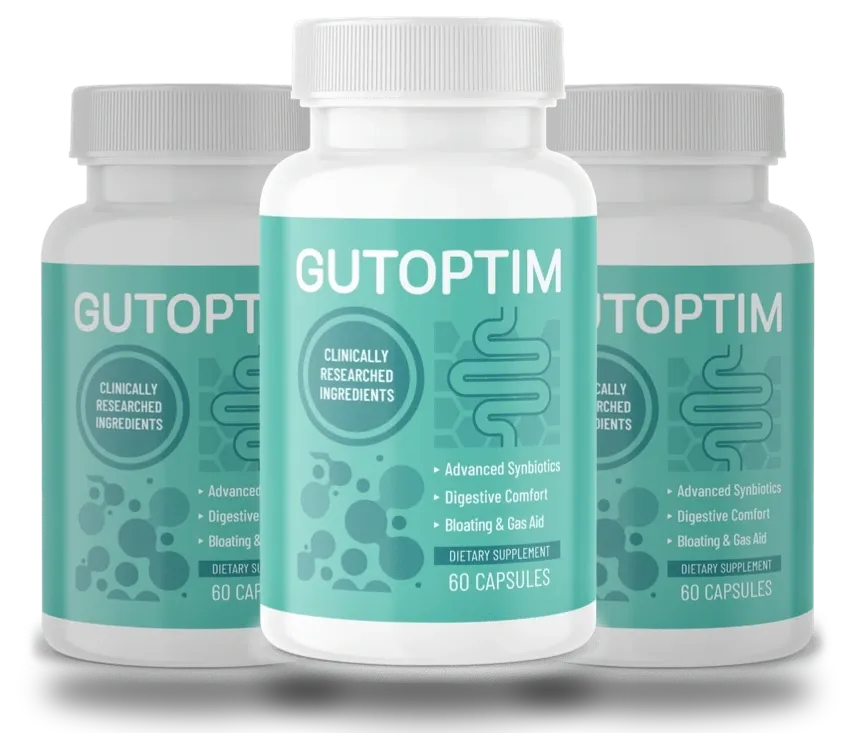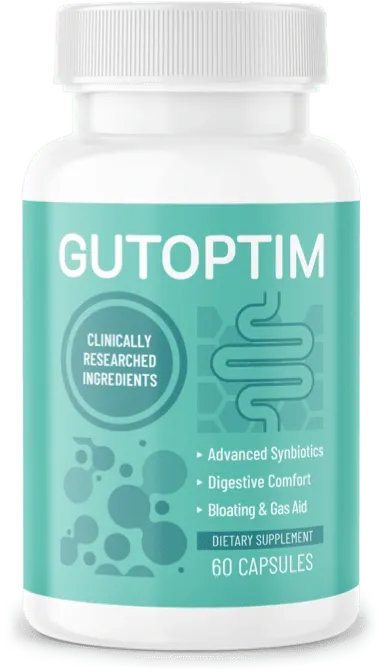

GutOptim Benefits: The Three Claims on the Label
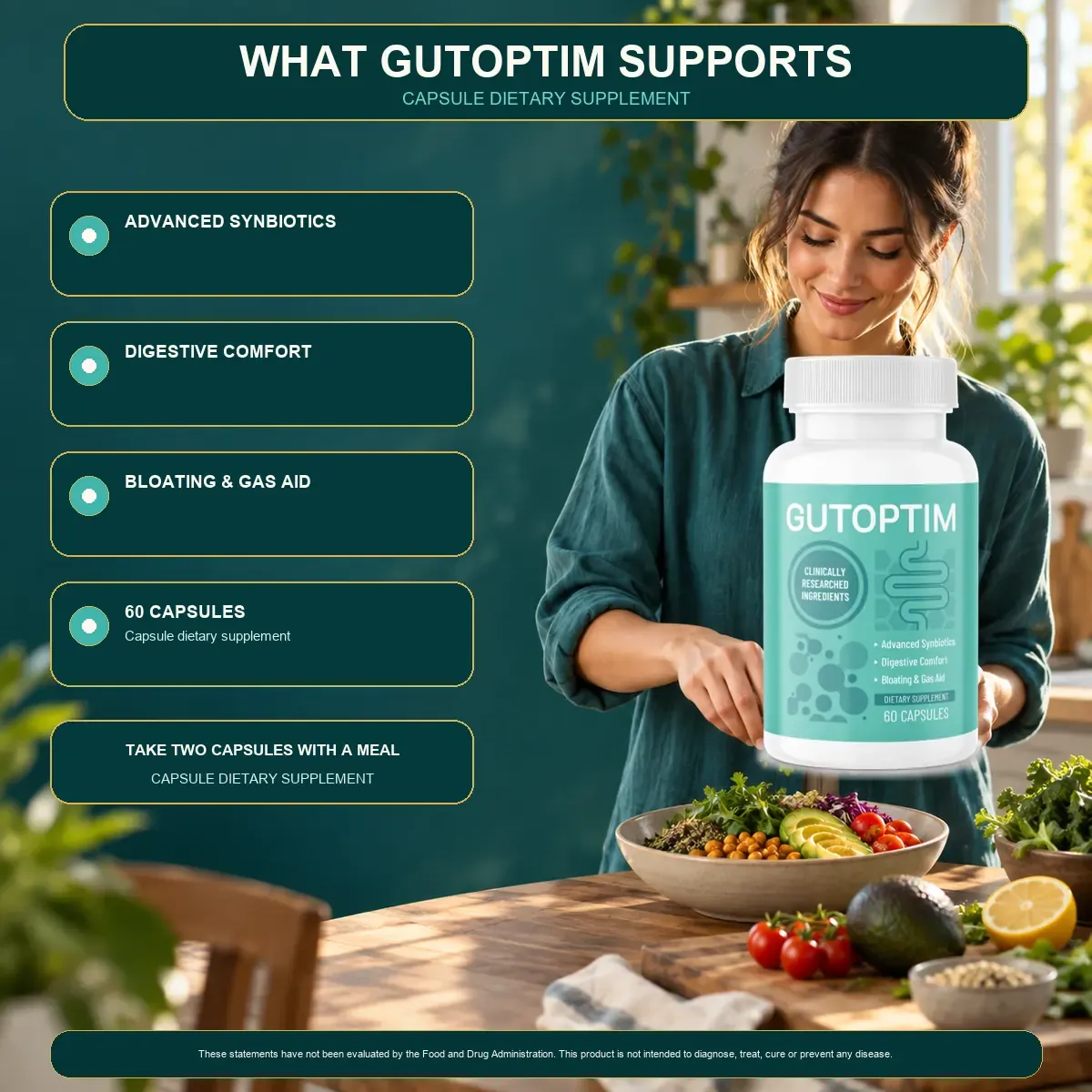
Quick answerGutOptim names three benefits on its label: Advanced Synbiotics, Digestive Comfort and Bloating & Gas Aid.
They come from ten ingredients in a 1.5 g blend, with fibers such as psyllium and flaxseed, plus plum and a probiotic.
What are the GutOptim benefits, in brief?
GutOptim makes three claims on its label. They are “Advanced Synbiotics,” “Digestive Comfort” and “Bloating & Gas Aid.” Each one has a dagger that links to the standard FDA statement.
These claims describe support for normal digestion. They are not claims to treat any condition. Below, each claim is matched with what studies of the ingredients found, and at what dose.
Advanced Synbiotics: what does the research show?
A synbiotic pairs a prebiotic with a probiotic. In GutOptim, the fibers are the prebiotic side, and Lactobacillus acidophilus is the probiotic side. The fibers give gut bacteria something to feed on.
Experts define probiotics as live microbes that help when given in adequate amounts (Hill et al., 2014). Their consensus names about 1 billion CFU per serving as a common minimum. Results are strain-specific, so the effect of one strain does not carry over to others (NIH ODS, Probiotics).
The prebiotic side is easier to judge. Fibers like pectin, oat bran and plum are fermented by gut bacteria. That feeding is the whole point of a prebiotic.
Digestive Comfort: what does the research show?
The best evidence for this claim comes from psyllium, the first ingredient on the label. Across 12 trials, fiber helped IBS symptoms, and the benefit came from psyllium (Ford et al., 2008). A later review of 14 trials with 906 patients found psyllium helped about 1 in 7 people (Moayyedi et al., 2014).
Food ingredients add support for regularity. About 10 g a day of flaxseed improved constipation over 12 weeks (Soltanian & Janghorbani, 2018). And 100 g of prunes a day worked at least as well as psyllium over three weeks (Attaluri et al., 2011).
Why soluble fiber matters
A U.S. clinical guideline suggests soluble fiber, not insoluble fiber, for IBS (ACG IBS guideline, 2021). Most of the fibers in GutOptim are soluble. The how GutOptim works page shows how these gels form.
Bloating & Gas Aid: what does the research show?
Bloating depends on how a fiber behaves in the gut. Psyllium is described as a gel fiber that gut bacteria barely ferment (McRorie et al., 2021). Less fermentation means less gas, which is why psyllium tends to be well tolerated.
Other fibers work differently. The same guideline warns that fermentable fibers can add gas and bloating (ACG IBS guideline, 2021). In a prune trial, 80-120 g a day raised flatulence along with stool output (Lever et al., 2019). So some people feel more gas in the first weeks before it settles.
Clay is sometimes linked to gas relief. The main human data for a clay covers acute diarrhea in children, not bloating in adults (Szajewska et al., 2006). The post on why fiber can cause bloating at first explains the early weeks.
Which ingredient backs which claim?
| Label claim | Ingredient | What studies found | Dose studied | Source |
|---|---|---|---|---|
| Advanced Synbiotics | Fibers plus L. acidophilus | Probiotics help when live and given in adequate amounts | About 1 billion CFU or more, strain-specific | (Hill et al., 2014) |
| Digestive Comfort | Psyllium | Psyllium improved IBS symptoms; about 1 in 7 people helped | About 10 g a day in studies | (Moayyedi et al., 2014) |
| Digestive Comfort | Flaxseed | Improved constipation over 12 weeks | About 10 g a day | (Soltanian & Janghorbani, 2018) |
| Digestive Comfort | Plum (prunes) | Worked at least as well as psyllium for constipation | 100 g of prunes a day | (Attaluri et al., 2011) |
| Bloating & Gas Aid | Psyllium | Gel fiber with little fermentation | About 10 g a day | (McRorie et al., 2021) |
| Bloating & Gas Aid | Pectin, oat bran, plum | Fermentable fibers can add gas at first | Varies | (ACG IBS guideline, 2021) |
What does “Clinically Researched Ingredients” mean?
This badge on the front of the pack refers to the ingredients. Psyllium, flaxseed, prunes and probiotics have each been studied in people. That part is accurate.
It does not mean GutOptim itself has been tested. Nobody has published a study of the finished capsule. Ingredient research tells you what a fiber can do at the dose tested, not what this blend does at 1.5 g.
This is common across the supplement aisle. Many products cite ingredient studies on their packs. Reading the dose used in each study is the simplest way to put a badge like this in context.
What practical benefits does the format offer?
Beyond the label claims, the format itself has some everyday upsides. These are about ease of use, not health effects.
A capsule, not a powder
Two capsules replace a scoop of fiber stirred into water. There is no taste or gritty texture to deal with.
One daily moment
The whole serving goes with one meal. That makes it easy to pair with a habit you already have.
Ten ingredients in one
Fibers, fruit, clay, two botanicals and a probiotic come in a single product.
A 60-day window
Each order has a 60-day money-back guarantee, so you can judge it over several weeks.
What do buyers say about the benefits?
The retailer reports a 4.3 out of 5 rating from 1,052 written reviews and 6,227 orders. It says 88% would recommend GutOptim. These figures are supplied by the retailer and are not independently verified.
The same reviews say most people waited 3-6 weeks before they noticed a change. The most common complaint was a slow start, with buyers wanting more in week one. That matches what fiber research would predict. Read the full set, including the low scores, on GutOptim reviews.
How do the doses compare with the studies?
The claims rest on studies that used much more of each ingredient. The bars below compare the whole 1.5 g blend with each study dose. Even if the blend were all one fiber, it would fall short.
Psyllium husk15% of the studied dose, at most
Flaxseed15% at most
Plum (prunes)Under 2%
Lactobacillus acidophilusNot comparable
The label gives no CFU count and no strain code. Probiotic effects depend on both. (NIH ODS, Probiotics)
What GutOptim does not do
GutOptim does not treat, cure or prevent IBS, constipation or any other condition. It is not a laxative drug and makes no weight-loss claim. It does not replace a fiber-rich diet or a visit to a doctor for new or severe symptoms. See GutOptim side effects for safety details.
How can you get the most from a fiber supplement?
A few habits help any fiber product work as intended. They matter more than the brand you pick.
Drink a full glass with each serving
Gel fibers need water to work. The label asks for at least a full glass of liquid.
Keep the same meal each day
Consistency helps the gut adjust to new fiber. Pick breakfast or dinner and stick with it.
Keep eating fiber-rich food
Beans, oats, fruit and vegetables supply the grams. The capsules add to that base.
Give it a few weeks
Early gas often settles as gut bacteria adjust. Fiber trials judged results over 3 to 12 weeks.
Full directions, including how to space the capsules from medicines, are on how to take GutOptim.
GutOptim benefits FAQ
What are the main benefits of GutOptim?
The label claims Advanced Synbiotics, Digestive Comfort and Bloating & Gas Aid. Each claim carries a dagger that points to the FDA statement.
Does GutOptim help with bloating?
Its lead fiber, psyllium, is described as a gel fiber that gut bacteria barely ferment, and guidelines favor this kind of fiber. Other fibers in the blend can add gas early on, so results vary from person to person.
What does “Advanced Synbiotics” mean on GutOptim?
It means the formula pairs prebiotic fibers with a probiotic, Lactobacillus acidophilus. The label does not give the strain or CFU count.
Is GutOptim clinically proven?
No. The badge reads “Clinically Researched Ingredients,” which means the ingredients have been studied. The finished product has not been tested in a published trial.
Can GutOptim help me lose weight?
GutOptim makes no weight-loss claim, and this page makes none either. Its claims are about digestive comfort, bloating and gas.
How soon will I notice GutOptim benefits?
There is no product timeline to quote. Single-ingredient fiber trials ran 3 to 12 weeks, and early gas is common as the gut adjusts.
Is GutOptim a laxative?
No. It is a dietary supplement. Its fibers work by holding water, the way bulk-forming fibers do.
Ready to try GutOptim?
Two capsules a day with a meal and a full glass of water. From $49 a bottle with free US shipping and a 60-day money-back guarantee. Questions first? Call +1 (302) 200-3480.