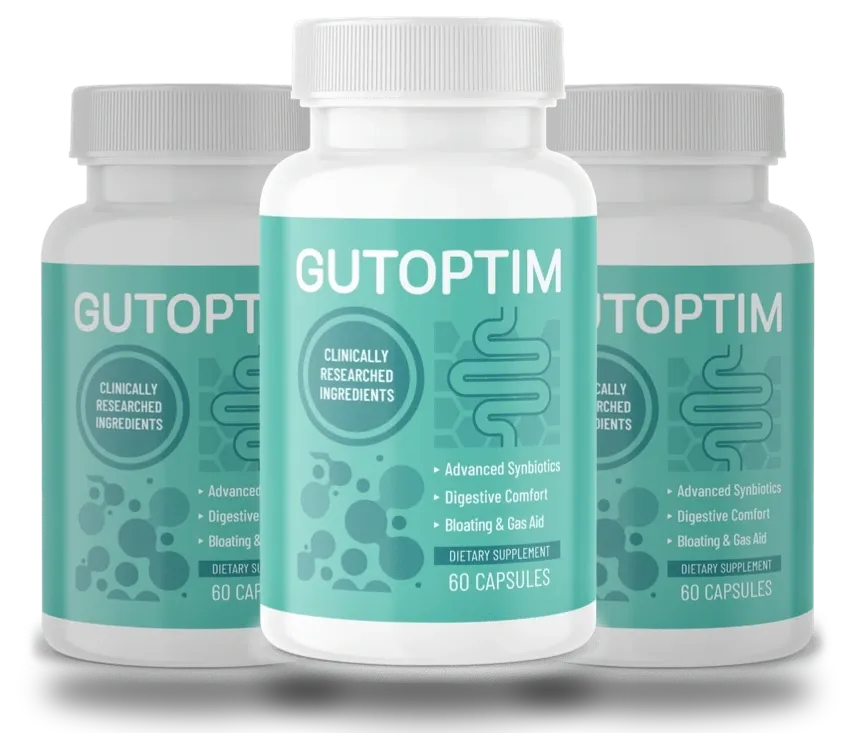

GutOptim Digestive Health Guide: Fiber, Water, Bloating and Probiotics
Quick answerMost U.S. adults eat about 15-18 g of fiber a day. The goal is about 22-34 g, and more than 90% of women and 97% of men fall short. Beans, fruit, oats and seeds close most of that gap. Water and daily movement help fiber do its job. GutOptim's 1.5 g blend is a small add-on to that plan, not a swap for food.
What does healthy digestion look like day to day?
Good digestion is mostly about rhythm. Food moves through at a steady pace, stools are easy to pass, and gas or bloating stays mild. Everyone's normal is a little different.
A few habits carry most of the load. Eat enough fiber, drink enough fluid, move your body and keep regular meal times. Sleep and stress play a part too.
Supplements come after those habits. GutOptim is a daily capsule built around fiber, so it only makes sense on top of a fiber-aware diet. The sections below walk through each habit in order.
Fiber
The single biggest dietary lever for regular, comfortable digestion.
Fluid
Fiber pulls water into the gut. Without enough, it works less well.
Movement
Daily activity helps keep things moving along the gut.
Routine
Regular meals give your gut a steady pattern to follow.
How much fiber do Americans eat vs. the goal?
Most Americans eat far less fiber than advised. U.S. adults average about 15 to 18 grams a day (USDA WWEIA, 2017-2020). The goal for adults is about 22 to 34 grams a day, depending on age and sex.
That shortfall is common. More than 90% of women and 97% of men do not reach their fiber goal (Thompson, 2021). So if you fall short, you are in the large majority.
How big is your own gap?
Subtract what you eat now from your target. A typical adult is missing somewhere around 5 to 19 grams a day. That is roughly one to three extra servings of beans, fruit or whole grains.
Track three normal days with a food app before you change anything. Most apps show fiber in grams. Your own number is more useful than any average.
Why food beats a capsule for the grams
Fiber-rich foods also bring vitamins, minerals and water. A bowl of lentil soup covers far more of the gap than any capsule can. Capsules help with habit and variety, not bulk.
Which foods give you the most fiber?
Beans, lentils, berries and pears top most lists. A half cup of cooked lentils alone covers about a quarter to a third of the daily goal. The numbers below are rounded and approximate.
| Food | Serving | Fiber (approximate) | Main fiber type |
|---|---|---|---|
| Lentils, cooked | 1/2 cup | About 8 g | Mix, rich in soluble |
| Split peas, cooked | 1/2 cup | About 8 g | Mix |
| Black beans, cooked | 1/2 cup | About 7 g | Mix, rich in soluble |
| Raspberries | 1 cup | About 8 g | Mostly insoluble |
| Chia seeds | 1 oz (about 2 tbsp) | About 10 g | Gel-forming soluble plus insoluble |
| Pear, with skin | 1 medium | About 5-6 g | Pectin plus insoluble skin |
| Apple, with skin | 1 medium | About 4 g | Pectin plus insoluble skin |
| Oatmeal, cooked | 1 cup | About 4 g | Beta-glucan (soluble) |
| Almonds | 1 oz | About 3.5 g | Mostly insoluble |
| Prunes (dried plums) | 1/4 cup | About 3 g | Mix, plus natural sorbitol |
| Ground flaxseed | 1 tbsp | About 2 g | Mucilage plus insoluble |
| Broccoli, cooked | 1/2 cup | About 2.5 g | Mostly insoluble |
| GutOptim | 2 capsules | Under 1.5 g | 1.5 g blend of ten ingredients, not all fiber |
What is the difference between soluble and insoluble fiber?
Soluble fiber dissolves in water and forms a soft gel. Insoluble fiber does not dissolve and adds bulk. Most plants carry both, in different mixes.
For sensitive guts, soluble fiber tends to be the gentler pick. A major U.S. guideline suggests soluble, not insoluble, fiber for people with IBS (ACG IBS guideline, 2021). In a review of 12 trials, the fiber benefit came from psyllium (Ford et al., 2008).
Some soluble fibers are fermented by gut bacteria, and some are not. Fermented ones feed bacteria but can also make gas. Psyllium is gel-forming and mostly not fermented (McRorie et al., 2021). Our article on psyllium vs. other fibers compares all six fibers in GutOptim.
Soluble fiber
- Dissolves and forms a gel
- Found in oats, beans, apples, psyllium, flax
- Often gentler for sensitive guts
- Some types feed gut bacteria
Insoluble fiber
- Does not dissolve; adds bulk
- Found in wheat bran, nut skins, vegetable peels
- Helps stool pass more easily
- Can feel rough if added fast
How does water help fiber work?
Fiber works by holding water. Gel-forming fibers soak it up and soften stool. If you add fiber without adding fluid, stools can turn hard instead of soft.
Fibers that swell also carry a choking risk if taken dry. U.S. rules require over-the-counter psyllium and glucomannan products to warn about choking and to call for a full 8 oz. glass of fluid (21 CFR 201.319). The GutOptim label carries the same kind of notice.
No single number fits everyone. A simple check is pale yellow urine and rarely feeling thirsty. Drink a little more on hot days and on days you add fiber.
One rule for swelling fibers
Take GutOptim with at least a full glass of liquid, as the label directs. Do not take it if you have trouble swallowing. The how-to-use page shows the full routine.
Does movement help digestion?
Movement helps. Walking, stretching and everyday activity all support the natural muscle action of the gut. You do not need a gym to benefit.
Small, regular habits are easier to keep than big plans. Pick two or three from the list below and repeat them daily.
Walk after a meal
A short, easy walk after lunch or dinner is simple to fit in and gentle on the stomach.
Keep meal times steady
Eating at roughly the same times each day gives your gut a pattern.
Do not ignore the urge
Waiting too long to use the bathroom can make stools harder to pass.
Slow down at meals
Chewing well and eating slowly means less swallowed air and less bloating.
Why can fiber cause gas and bloating at first?
More fiber can mean more gas at first. Gut bacteria ferment certain fibers and make gas as a by-product. It is normal and usually eases as your routine settles.
Some foods add more gas than others. In one trial, 80 to 120 g of prunes a day raised stool weight and frequency, but also raised flatulence (Lever et al., 2019). The same U.S. guideline notes that fermented fibers can add gas and bloating (ACG IBS guideline, 2021).
The fix is pace. Add one new fiber food at a time and give it a week. Our post on why fiber can cause bloating at first lays out a gentle plan. Early side effects with the capsule are covered on the side effects page.
Where do probiotics fit in digestive health?
Probiotics are live microbes that can help when taken in adequate amounts. About 1 billion CFU per serving is a common minimum (Hill et al., 2014). CFU means colony-forming units, a count of live cells.
The details matter more than the word "probiotic." Advice needs to be strain-specific, and many products hold 1 to 10 billion CFU per dose (NIH ODS, Probiotics). Yogurt with live cultures and kefir are common food sources.
GutOptim lists one probiotic, Lactobacillus acidophilus, next to its fibers. That pairing is why the label says "Advanced Synbiotics." A synbiotic simply combines a fiber that bacteria eat with live bacteria.
When should you see a doctor instead?
Some symptoms need a doctor, not a supplement. Book a visit if any of the signs below show up. Seek urgent care for severe pain, a swollen belly with no gas or stool, or a capsule that feels stuck in your throat or chest.
| Warning sign | Why it matters | What to do |
|---|---|---|
| Blood in the stool or black, tarry stools | Can point to bleeding in the gut | Call your doctor soon |
| Weight loss you cannot explain | Not a normal effect of fiber | Book a check-up |
| Severe or constant belly pain | Needs a proper exam | Seek care the same day |
| Fever, vomiting or a swollen, hard belly | Can signal a blockage or infection | Seek urgent care |
| Trouble or pain when swallowing | Swelling fibers are unsafe here | Do not take GutOptim; see a doctor |
| Bowel habits that change for weeks | A new pattern deserves a look | Talk to your doctor |
| Family history of colon disease | Screening plans may differ | Ask about screening |
The label also says to ask a physician first if you take medicine or have a medical condition. It is not for anyone under 18 or for pregnant or nursing mothers. See who GutOptim is for.
Where does GutOptim fit in a digestive health routine?
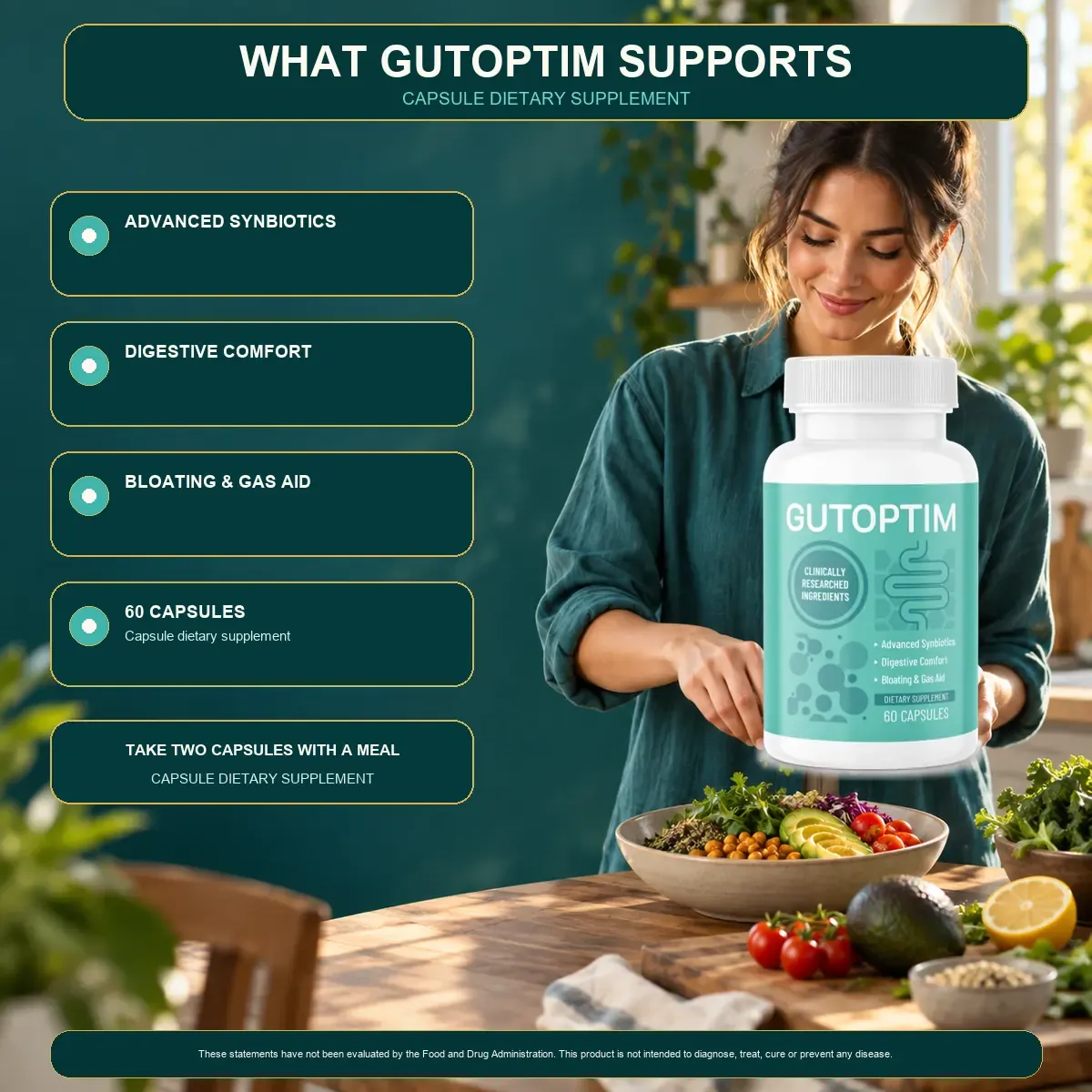
GutOptim fits as a small daily add-on to a fiber-first diet. Two capsules with a meal give a 1.5 g blend of ten ingredients. The label calls them "Digestive Comfort" and "Bloating & Gas Aid."
The fair view is simple. Studied fiber doses run from about 3 to 10 g a day for single fibers, and the whole GutOptim blend is 1.5 g. The amount of each ingredient and the probiotic count are not published.
So think of it as a habit helper, not your fiber source. The ingredients page covers each of the ten, and the Supplement Facts page reads the label line by line. Comparing brands? Use our buyer's checklist.
GutOptim digestive health guide FAQ
How much fiber should I eat each day?
Most adults are advised to get about 22 to 34 grams a day, depending on age and sex. The average U.S. adult gets about 15 to 18 grams.
Is soluble or insoluble fiber better for digestion?
Both have a role. Soluble fiber forms a gel and tends to be gentler. Insoluble fiber adds bulk. Most plant foods contain some of each.
Why do I feel bloated when I eat more fiber?
Gut bacteria ferment some fibers and make gas as they do. It is most common when you add a lot at once. Going slowly and drinking water usually helps.
Can GutOptim replace fiber from food?
No. The whole GutOptim blend is 1.5 g per 2 capsules, shared by ten ingredients. A half cup of cooked lentils has several times more fiber.
How much water should I drink with GutOptim?
The label says to take it with at least a full glass of liquid. Keep drinking through the day as you add fiber from food.
When should I see a doctor about digestive problems?
See a doctor for blood in the stool, black stools, weight loss you cannot explain, severe or constant belly pain, fever, vomiting, trouble swallowing, or a change in bowel habits that lasts for weeks.
Do probiotics help everyone?
No. Effects depend on the exact strain and the amount taken. Probiotic advice should be strain-specific, and not every product lists a strain.
Add GutOptim to a fiber-first routine
Two capsules a day with a meal and a full glass of water. From $49 a bottle with free US shipping and a 60-day money-back guarantee. Questions first? Call +1 (302) 200-3480.